```cshtml
Federico Tesio breeding philosophy applied to modern markets
From bloodstock agent to pedigree analyst in Thoroughbred decision making
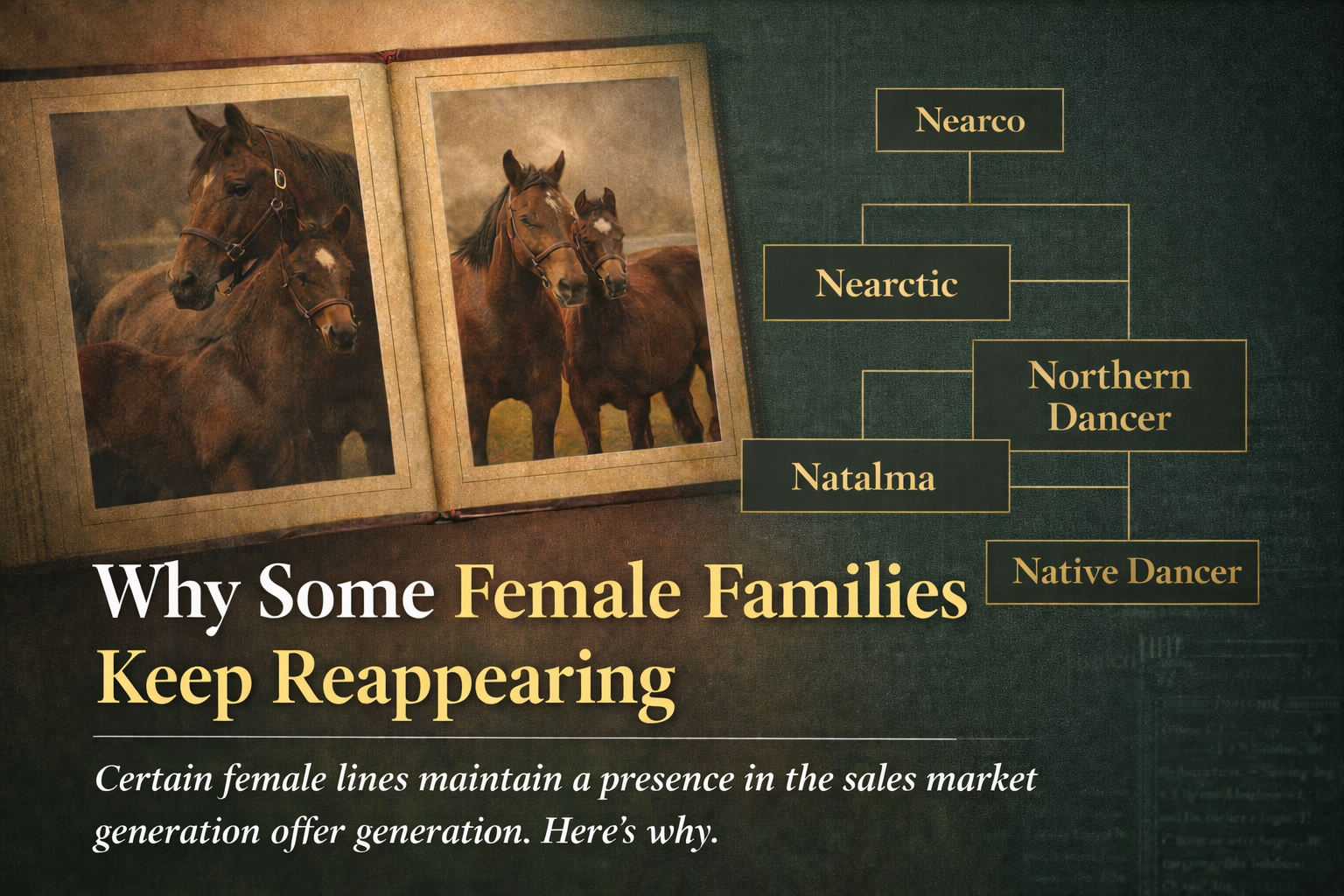
Recurring Thoroughbred female families across generations

AI-Supported Thoroughbred Pedigree Analysis

Horse Sense Pedigree Analytics uses the Horse Sense Probability-Driven Breeding Framework™ to help commercial breeders evaluate mares, compare stallion options, and define stud fee risk, sale-return probability, and commercial upside before a breeding decision is made.

Thoroughbred breeding has always combined horsemanship, pedigree knowledge, physical evaluation, market awareness, and risk tolerance. Every breeder knows that no mating can be guaranteed. A good-looking foal can fall short in the sales ring. A fashionable stallion can become overvalued. A mare with a familiar page may still have limitations that reduce commercial upside. A mating that looks strong on paper may not create enough return to justify the stud fee, raising cost, and sale risk.

Horse Sense was built to bring structure to that decision. The purpose of the system is not to replace horsemanship or claim certainty in an uncertain business. The purpose is to organize the major factors that influence a Thoroughbred breeding decision before capital is committed.

  • Evaluate the mare before choosing the stallion
  • Separate pedigree signal from stallion fashion
  • Compare sire options against real commercial outcomes
  • Define stud fee risk before capital is committed
  • Estimate the floor, median, and upside of a proposed mating

Start With the Mare

The Horse Sense Mare-First Evaluation™ begins with the mare. Many commercial breeding decisions start with the stallion. A breeder may begin by looking at fashionable sires, advertised stud fees, nick ratings, recent sales results, or popular first-crop stallions. Those factors matter, but they do not answer the most important question first: what can this mare realistically support?

Before selecting a stallion, the mare needs to be evaluated as a commercial and genetic starting point. Her race record, produce record, female family, physical type, pedigree structure, and market position all affect what kind of mating makes sense. A mare with a deep, active black-type family may be able to support more stud fee risk. A mare with a lighter page may need a stallion who adds commercial strength without requiring the mare to carry too much of the value herself. A mare with physical limitations may need a mating that improves balance, scope, efficiency, or commercial presentation.

The central question is not simply which stallion is good. The better question is which stallion gives this mare enough upside to make the risk worth taking, without requiring her to carry a page she does not have. That question is the foundation of the Horse Sense approach.

A Structured Evaluation, Not an Opinion

Traditional bloodstock decisions often rely on experience, reputation, visual impression, nick ratings, sale averages, or individual success stories. Each of those inputs can be useful. The problem is that they are often considered together without a consistent structure.

A stallion may be fashionable, but that does not mean he fits the mare. A nick may be positive, but that does not mean the mating makes commercial sense. A sales average may look strong, but it may be driven by elite mares that do not resemble the mare being evaluated. A physical match may look appealing, but if the resulting foal is unlikely to have enough page or market demand, the upside may still be limited.

Horse Sense separates the decision into layers. Physical traits are evaluated separately from pedigree structure. Female-family signal is considered separately from stallion fashion. Commercial return is considered separately from theoretical compatibility. This makes it easier to identify where the mating is strong, where it is vulnerable, and whether the total risk is justified.

Physical Evaluation and Conformation Review

Physical conformation is one of the first layers of the Horse Sense system because the market still evaluates horses visually. Pedigree may create interest, but physical presentation often determines how much confidence buyers have when the horse walks out of the barn.

Horse Sense evaluates conformation for balance, efficiency, scope, athletic function, and commercial presentation. The goal is not to describe a horse in vague terms, but to identify physical strengths and limitations that may affect both performance potential and sale value.

A mare with good balance and substance may give a breeder more flexibility. A mare who lacks scope, length, or athletic efficiency may require a stallion who can improve those areas. A mare who is commercial but physically plain may need a mating that creates a more attractive sales horse. This physical layer helps prevent pedigree analysis from becoming disconnected from the actual horse.

Female-Family Signal

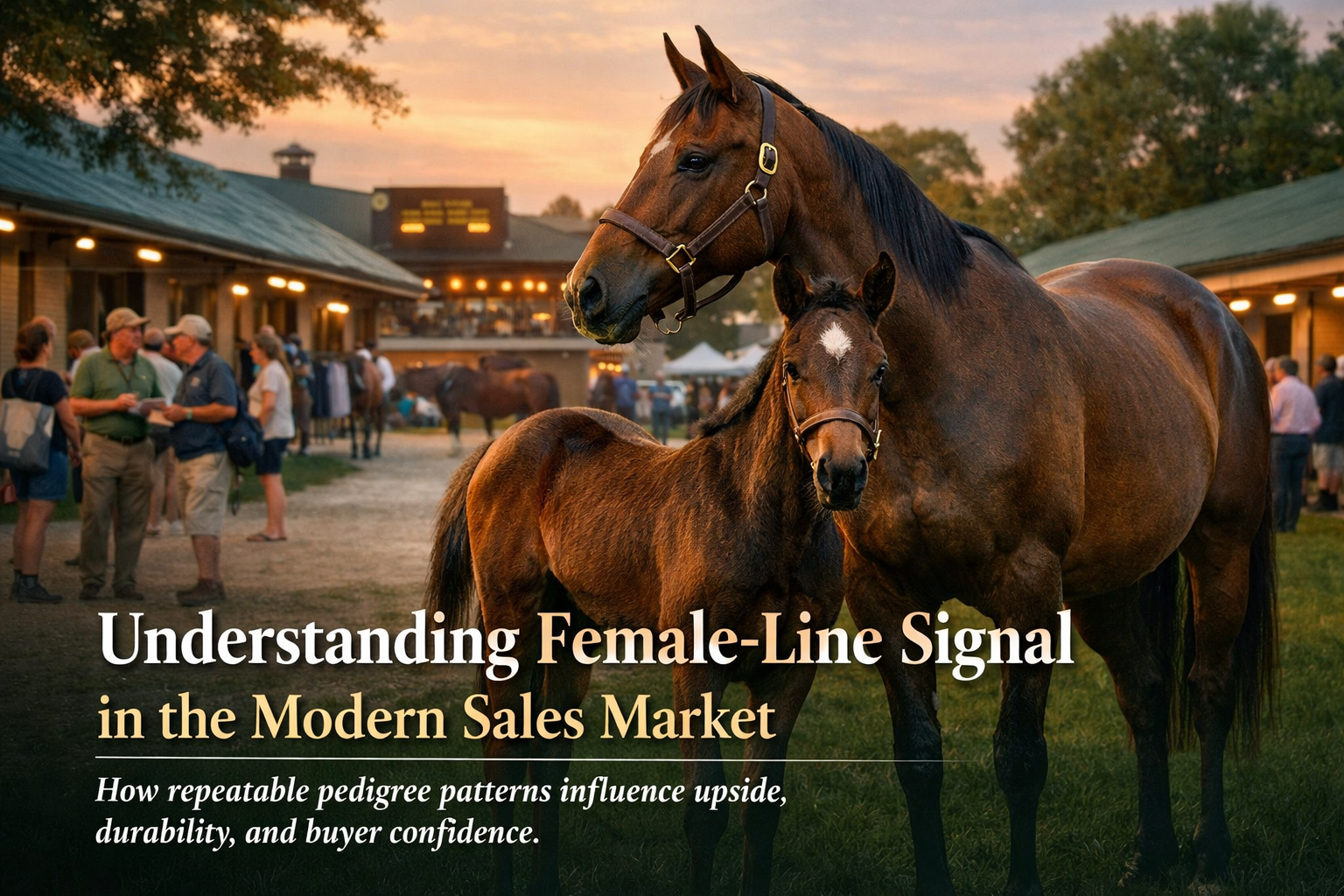
The Horse Sense Female-Line Structural Signal™ framework is one of the core elements of Horse Sense Pedigree Analytics. A mare is not evaluated only by her sire or by the presence of familiar names in the pedigree. Her female family matters because it shows whether quality has repeated across generations.

The system looks at black-type production, graded performance, depth of family, active runners, sale strength, and whether certain performance patterns appear more than once. The strongest families often show repeatable signal. They produce quality runners from different stallion lines, show durability or class across multiple branches, and continue to update through active runners and commercial sale results.

Weaker families may still produce good horses, but the risk profile is different. If the mare comes from a lighter family, the mating may need to rely more heavily on the stallion for commercial value. That increases risk, especially if the stud fee is high relative to what the mare can realistically produce in the sales ring.

Pedigree Pattern Recognition

Pedigree analysis is not just a matter of finding famous names or accepting a nick rating. Horse Sense looks for repeatable pedigree patterns that have produced meaningful results in similar contexts. This includes sire-line compatibility, broodmare-sire influence, female-family reinforcement, inbreeding structure, outcross value, and proven patterns across comparable mares.

A mating may be attractive because it repeats a pattern that has worked with similar blood. Another mating may be risky because it relies on a theoretical cross with little real evidence behind it. Some crosses may show commercial appeal but limited performance support. Others may show strong performance logic but lack the sales-ring demand needed for a commercial breeder.

The system does not treat every pedigree pattern equally. It asks whether the pattern is relevant to this mare, this stallion, this fee level, and this market.

Stallion Selection and Sire Compatibility

Choosing a stallion is not only about who is popular. It is about matching the stallion’s strengths, weaknesses, fee, market position, and career stage to the mare.

Horse Sense evaluates stallions by more than advertised reputation. The system considers whether the stallion is proven, emerging, entering a risky crop stage, commercially hot, undervalued, or potentially overexposed. A first-crop stallion may offer upside but limited evidence. A second- or third-crop stallion may carry market risk if early runners have not appeared yet. A proven stallion may offer more reliability but may be priced too high for the mare’s commercial ceiling.

The question is not whether a stallion is good in general. The question is whether he is the right risk for this mare at this fee. This matters because commercial breeders are not only breeding racehorses. They are also managing capital. Stud fee, boarding, foaling, raising, sales preparation, and sale expenses all create a cost basis before the horse ever enters the ring.

Commercial Market and Stud Fee Analysis

The Horse Sense Commercial Return Range™ compares proposed matings against real market behavior. This includes stud fee multiples, comparable sale results, sire averages, median outcomes, buyback risk, and whether similar mares have produced foals that sold well enough to justify the investment.

The system places particular emphasis on realistic return ranges. Averages can be misleading because they are often lifted by a small number of expensive horses. Median results may offer a more practical view of the middle of the market. Downside cases are equally important because many breeding outcomes fall below the optimistic projection.

A proper commercial evaluation asks what the likely floor is, what the realistic median is, what the reasonable upside is, how much capital is at risk, and how much of the expected value depends on the stallion remaining fashionable by the time the foal reaches the sales ring.

Risk, Probability, and Return

Horse Sense does not present a mating as a guaranteed result. It presents the mating as a range of probable outcomes. That distinction matters because breeding decisions are made before the foal exists. The breeder is making a capital decision under uncertainty.

The final result may be affected by fertility, pregnancy, foaling, physical development, veterinary issues, market timing, sale placement, buyer appetite, and the stallion’s reputation at the time of sale. Because of that uncertainty, the goal is not to predict one outcome. The goal is to understand the range.

A disciplined breeding decision should define downside risk before chasing upside. If the expected median return does not justify the cost, the mating may be too aggressive. If the ceiling is attractive but the floor is dangerous, the breeder needs to know that before committing to the stud fee. If a lower-cost stallion creates a similar realistic return with less downside, that may be the better decision.

Removing Bias From Bloodstock Decisions

Every breeder has preferences. Every market has trends. Every sale season creates new stories about which stallions are hot, which sire lines are in demand, and which physical types are bringing money. The problem is not that those signals are useless. The problem is that they can create bias.

A breeder may overpay for fashion. A buyer may overvalue one update. A mare owner may chase a stallion because of one exceptional sale result. A mating may be justified by a nick without enough attention to the mare’s actual production profile. A physical impression may overshadow a weak commercial page.

Horse Sense is designed to slow the decision down and separate the inputs. The system asks what the mare brings, what the stallion adds, what the market has actually rewarded, and where the risk remains. This does not remove uncertainty, but it does reduce avoidable mistakes.

What the Evaluation Produces

The output of Horse Sense Pedigree Analytics is a structured decision framework. Depending on the evaluation, the analysis may include a mare profile summary, race record and produce record review, physical assessment, female-family signal, pedigree pattern analysis, sire compatibility review, stallion shortlist, commercial market comparison, stud fee risk analysis, estimated sale range, downside case, median expectation, upside case, and final recommendation.

The purpose is not to overwhelm the breeder with data. The purpose is to make the decision clearer. A good evaluation should help answer whether the mare is worth breeding commercially, what type of stallion she needs, how much stud fee risk she can support, which stallions improve the mating without creating unnecessary downside, and whether the expected sale result justifies the cost.

Why This Matters

Breeding decisions are made under uncertainty, but the cost of being wrong is real. Stud fees, rising costs, sale expenses, and market variability create a wide range of outcomes, most of which fall closer to average than exceptional.

This framework is designed to define that range before the decision is made. It identifies downside risk, realistic return expectations, and where true opportunity exists. By replacing instinct-driven decisions with structured analysis, it improves consistency, protects against avoidable losses, and allows breeders to operate with clearer expectations in an uncertain market.

Instead of asking whether a mating is interesting, the system asks whether it is justified. Instead of chasing the highest possible upside, it defines the floor, median, and ceiling. Instead of relying on opinion alone, it organizes the evidence. Instead of starting with the stallion, it starts with the mare.

Start With Your Mare

The best breeding decisions begin with a clear understanding of the mare. Submit a mare for evaluation to begin reviewing her pedigree structure, female-family signal, physical profile, stallion options, stud fee risk, and commercial return range.

To review the underlying concepts first, explore the core pages that define the Horse Sense approach to pedigree analytics, mare analysis, bloodstock decision making, and commercial breeding strategy.

```